MMA Wagering Security: UFC Fight Integrity and Betting
 Available in US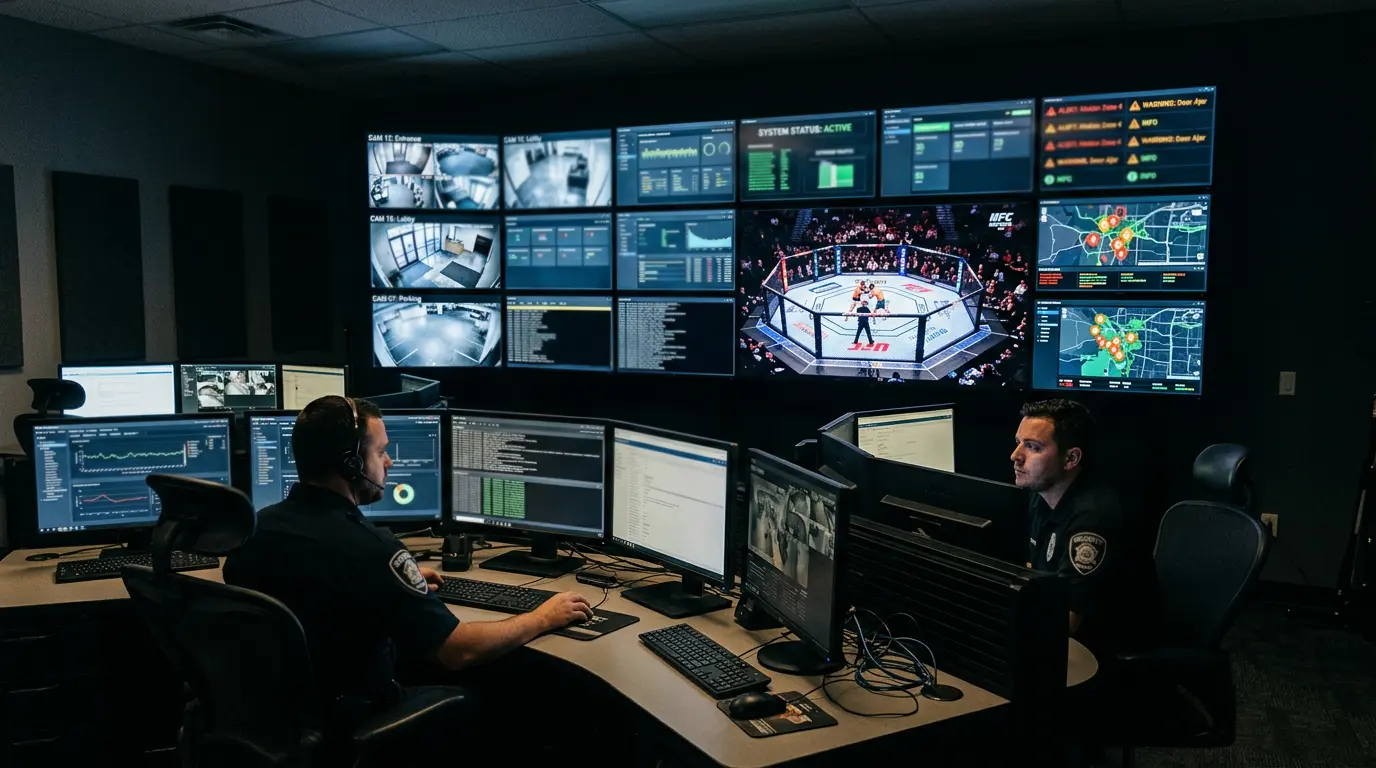
On a Saturday night in November 2025, I had a small wager on the undercard of UFC Vegas 110. The bout between Dulgarian and Del Valle looked routine — two relatively unknown fighters on the prelims. Then the fight played out in a way that made experienced watchers uncomfortable, and within hours the story exploded: suspicious betting patterns had been flagged, the fighter was terminated by the UFC, and the FBI opened an investigation. Caesars and DraftKings voided all bets on the fight and returned stakes. I got my money back. But the incident left a mark on how I approach every undercard bet I place.
Fight integrity is the issue that UFC betting guides rarely discuss in depth, partly because it is uncomfortable and partly because the data is difficult to quantify. But for UK punters placing real money on real fights, understanding how the integrity system works — and where its weaknesses lie — is not optional. It is part of the handicapping process.
UFC Betting Monitoring Systems and Protocols
The UFC signed a partnership with U.S. Integrity — now rebranded as IC360 — in January 2023. That deal made IC360 the primary watchdog for suspicious betting activity across all UFC events. Nine months later, in September 2023, the UFC added a second layer by partnering with ProhiBet, a platform that monitors betting markets in real time and flags anomalies.
Dana White has been characteristically blunt about the system. “We take this very serious,” he said following the Vegas 110 incident. “We’re watching every fight that happens in the UFC, from the first prelim to the main event. IC360 monitor all of the betting.” The dual-layer approach means that betting data from sportsbooks worldwide is fed into monitoring algorithms that compare actual wagering patterns against expected baselines. When the volume on one side of a fight spikes beyond statistical norms — particularly on a low-profile bout where betting volume is usually thin — the system triggers an alert.
The alerts flow to UFC’s compliance team, who make the call on whether to investigate further, contact the fighters, or pull the fight from the card entirely. The speed of this process has improved dramatically: in early cases, investigations happened after the fight. Now, the UFC has demonstrated willingness to act before the first bell rings.
Recent Incidents: Vegas 110 and UFC 324
The Dulgarian-Del Valle situation at UFC Vegas 110 in November 2025 was the most public integrity failure in UFC history. After the fight, analysis revealed that betting patterns on the bout had been wildly irregular — heavy money flowing to one side in a fight that typically would attract minimal wagering interest. DraftKings and Caesars voided all bets and refunded customers. The UFC terminated Dulgarian’s contract. The FBI investigation remains ongoing.
Dana White’s response was unambiguous. “If you try to do this, we will be your worst enemy,” he warned. “We will immediately go after you, guns a-blazing, with the FBI and whoever else we need to get, and we will do everything we can to make sure you go to prison.” That statement was directed at fighters but also served as a public signal to the betting market: the UFC considers integrity a brand-survival issue, not just a regulatory box to tick.
Two months later, in January 2026, the system proved it could act preventatively. The bout between Johnson and Hernandez was pulled from the UFC 324 card after IC360 flagged irregular betting activity before the fight took place. White described the decision plainly: “We got called from the gaming integrity service, and I said ‘I’m not doing this again.’ So we pulled the fight.” No punches were thrown. No bets needed to be voided. The system caught the anomaly upstream.
These two incidents, eight weeks apart, represent the spectrum of outcomes. In one case the fight happened, bets were voided after the fact, and an investigation followed. In the other, the fight was cancelled before it started. For punters, both scenarios carry financial consequences — but the UFC 324 approach is clearly preferable, because it prevents the possibility of paying out on a compromised result.
What Happens to Your Bet When a Fight Is Pulled
When a fight is removed from a card for integrity reasons, UK bookmakers follow their standard void-fight procedures. Single bets on the affected fight are voided and your stake is returned. The mechanics are the same as any other fight cancellation — injury, illness, or weight miss — and the refund is typically automatic.
Where it gets complicated is accumulators. If the voided fight was one leg of a multi-bet, most UK bookmakers will recalculate the acca without the voided leg. A four-leg acca becomes a three-leg acca at the revised odds. Your potential payout decreases, but you do not lose the entire bet. Some bookmakers handle this differently, so checking the specific terms before the event is worthwhile.
One important distinction: a fight voided for integrity reasons is treated the same way by bookmakers as a fight cancelled for any other reason. The bookmaker does not distinguish between “pulled due to suspicious betting” and “pulled due to injury.” Your refund rights are identical in both cases. The difference is reputational — an integrity cancellation generates headlines, while an injury cancellation is routine.
I now keep a mental register of fighters who have been associated with integrity concerns, not because I believe they are guilty (investigations take time, and conclusions are not always public), but because fights involving those fighters carry an additional risk variable — the risk of cancellation itself. Even a false alarm can void your bet, and false alarms are more likely in future bouts involving fighters who were previously flagged.
How UK Punters Can Protect Themselves
The first line of defence is simple: be cautious with undercard bets on fighters you have never heard of. The Vegas 110 and UFC 324 incidents both involved low-profile bouts on the preliminary card. High-profile main events carry far lower integrity risk because the fighters have more to lose, the scrutiny is higher, and the financial incentive to compete honestly is much stronger.
Second, watch for unusual line movements on obscure fights. If you notice a prelim bout where the line has shifted dramatically without any public explanation — no injury news, no camp changes, no media coverage — that is worth noting. I do not suggest avoiding the fight automatically, but I do suggest reducing your stake or skipping it entirely. The information asymmetry in these situations is extreme, and you are almost certainly on the wrong side of it.
Third, use UKGC-licensed bookmakers exclusively. UK-regulated platforms are legally obligated to void bets on compromised events and return stakes. Offshore or unregulated operators may not follow the same protocols, which means you could lose your stake on a fight that was later determined to be compromised. The protection that UKGC licensing provides is not theoretical — it was tested in both the Vegas 110 and UFC 324 scenarios, and UK customers received their refunds.
For the deeper structural issue behind these integrity concerns — specifically, how fighter compensation levels create vulnerability — the fighter pay and betting risk analysis explores the economics that make match-fixing a persistent threat.
Has a UFC fight ever been confirmed as fixed?
No UFC fight has been officially confirmed as fixed through a completed legal process. The November 2025 incident at UFC Vegas 110 resulted in a fighter’s termination and an ongoing FBI investigation, but the investigation has not yet concluded. Several other fights have been flagged for suspicious betting patterns, but no fighter has been convicted of match-fixing in connection with a UFC bout.
Will my bookmaker refund bets if a UFC fight is flagged for suspicious activity?
If the fight is cancelled before it takes place, your stake is automatically returned as a void bet. If the fight happens and is later investigated, the bookmaker’s response depends on the outcome of the investigation and their own terms. In the Vegas 110 case, major operators voluntarily refunded all bets. UKGC-licensed bookmakers are bound by regulatory standards that protect customers in these situations.
Written by the editors at ufc Fight Bets.