Sportsbooks Comparison: UFC Prediction Markets
 Available in US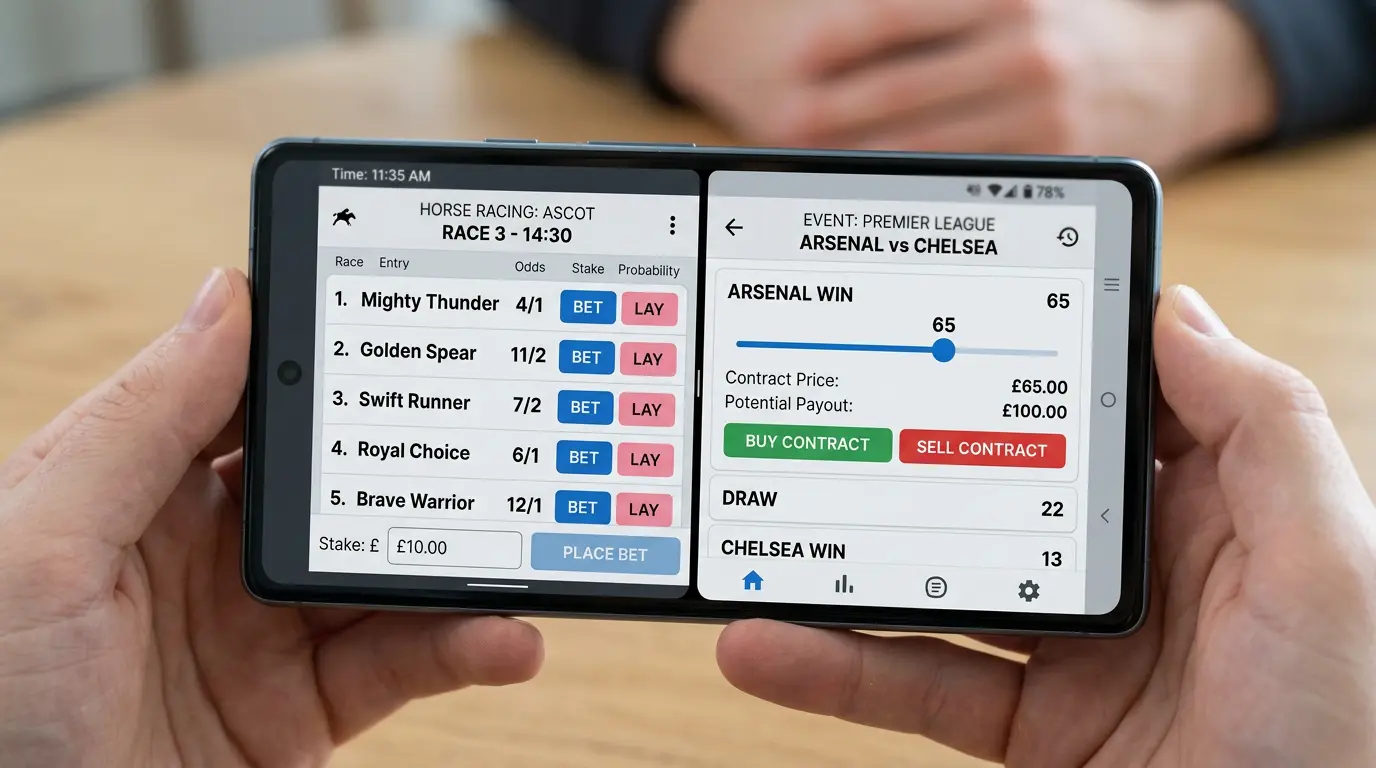
In November 2025, something happened that would have been unthinkable a few years earlier: the UFC signed a multi-year partnership with Polymarket, a prediction market platform. Polymarket odds began appearing directly in UFC broadcast graphics, right alongside the traditional sportsbook lines. For the first time, millions of fight fans saw two completely different mechanisms pricing the same event — and for sharp bettors like me, it opened up an entirely new dimension of analysis.
Prediction markets and sportsbooks both let you wager on fight outcomes, but they work in fundamentally different ways. Understanding the distinction is not just academic — it is a practical edge that lets you spot pricing discrepancies and exploit them.
Mechanics of UFC Prediction Betting Markets
A prediction market does not employ oddsmakers. There is no team of analysts setting a line. Instead, participants buy and sell contracts priced between 0 and 100 cents. A contract that pays $1 if Fighter A wins and $0 if Fighter A loses might trade at 65 cents, implying a 65% probability. If you believe Fighter A’s true probability is higher than 65%, you buy the contract. If you believe it is lower, you sell.
The UFC-Polymarket partnership integrated this mechanism directly into the fight ecosystem. Viewers watching a main event could see the prediction market’s implied probability alongside the sportsbook odds, creating real-time transparency about how two different pools of money were pricing the same outcome.
The key mechanical difference from a sportsbook is that prediction market prices are set entirely by supply and demand among participants, not by a bookmaker managing risk. There is no built-in overround. The total implied probability of all outcomes should, in theory, sum to exactly 100% — minus whatever fees the platform charges for trading. This contrasts with sportsbooks, where the overround typically pushes the total above 104-106%, embedding the bookmaker’s margin into every price.
For punters, this means prediction market prices are often a cleaner signal of collective market belief. When the prediction market and the sportsbook disagree on a fighter’s probability by more than a few points, one of them is likely wrong — and that gap is where the value lives.
Key Differences from Traditional Sportsbooks
Eric Foote, founder of VIG Partners, highlighted the competitive tension between the two models: legal sports betting operators are going back to their league deals and trying to expand their category definitions to cover prediction market territory — and those expansions come with additional payments. The sportsbook industry views prediction markets as direct competition, and the economic stakes are significant.
The practical differences that matter for your betting are straightforward. Sportsbooks offer a wide range of bet types — moneyline, method of victory, round totals, props, accumulators — while prediction markets typically offer binary outcomes: will this fighter win, yes or no. The simplicity of prediction markets means they lack the exotic prop coverage that makes UFC betting interesting, but they also lack the inflated margins that bookmakers load onto those exotic props.
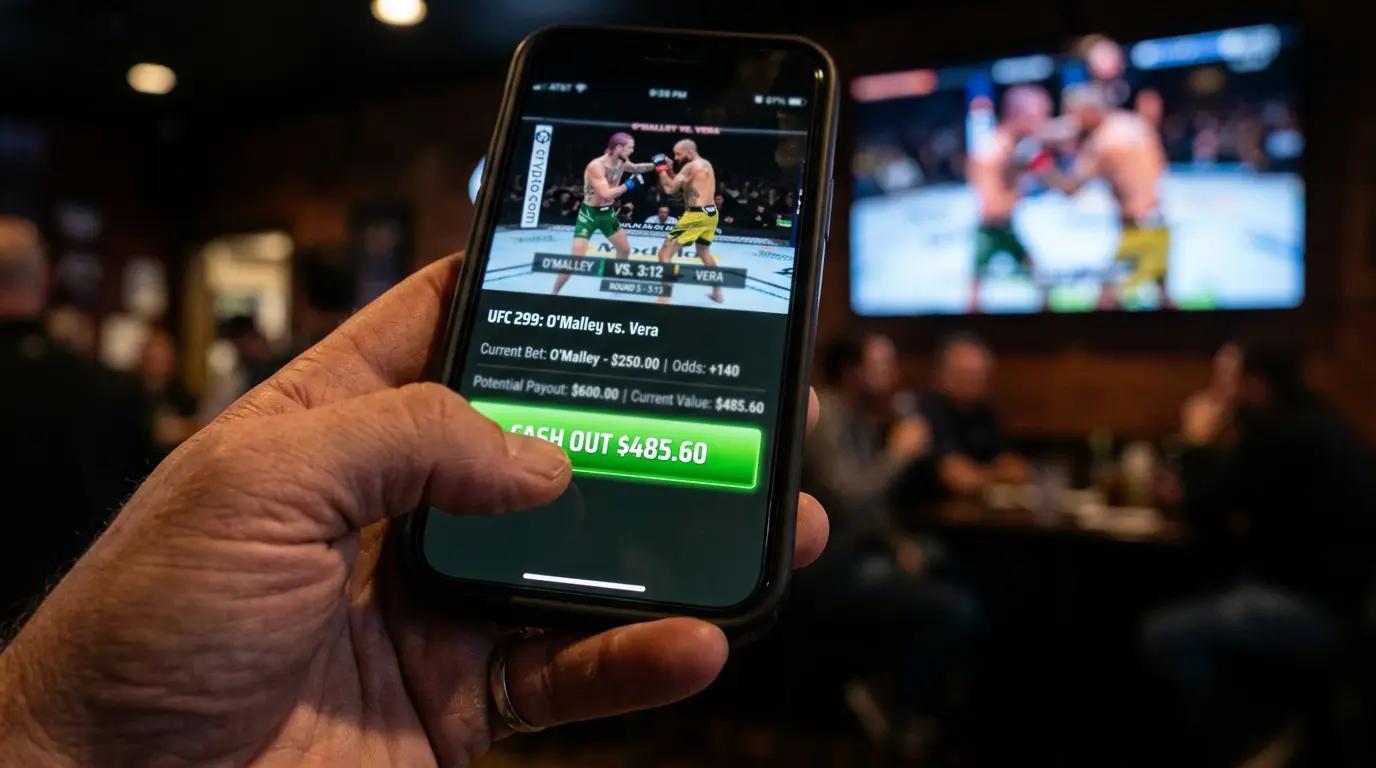
Timing is another difference. Prediction markets trade continuously — you can buy a contract weeks before a fight and sell it the next day if the price moves in your favour, taking profit without waiting for the fight to happen. Sportsbook bets are generally locked in once placed (with some cash-out options). This liquidity gives prediction market participants more flexibility to manage positions, but it also means prices adjust faster to new information.
Settlement is the final distinction. A sportsbook pays out immediately after the fight result is confirmed. Prediction markets may take longer to settle, depending on the platform’s dispute resolution process. For most UFC outcomes the settlement is fast and uncontroversial, but in edge cases — disqualifications, no contests, overturned results — the settlement process can be less straightforward than a sportsbook’s established rules.
UK Regulatory Position on Prediction Markets
Here is where UK punters need to pay careful attention. The regulatory status of prediction markets in the UK is murky and evolving. Traditional sportsbooks operating in the UK are licensed and regulated by the UK Gambling Commission (UKGC), which provides a framework of consumer protection, dispute resolution, and responsible gambling requirements. Prediction market platforms like Polymarket are not currently licensed by the UKGC, which means they fall outside the UK’s established regulatory framework.
For UK residents, using an unlicensed platform creates several risks. There is no UKGC recourse if a dispute arises. Funds are not protected under UK gambling regulations. And the tax treatment may differ — while winnings from UKGC-licensed betting are tax-free for UK punters, winnings from unlicensed platforms exist in a greyer regulatory space.
The regulatory picture is likely to clarify in the coming years as prediction markets grow. The UK government and UKGC are watching the development of event-contract platforms closely, particularly given the crossover with sports betting. For now, my advice to UK punters is to use prediction market prices as analytical tools — comparing them to sportsbook odds to identify discrepancies — while placing actual bets through UKGC-licensed operators where your funds and rights are protected.
The $500 Million Tax Revenue Debate
The tension between prediction markets and sportsbooks is not just commercial; it is fiscal. The American Gaming Association reported that prediction markets offering sports event contracts have diverted more than $500 million in potential sports betting tax revenue in the past year. That number has caught the attention of regulators and politicians on both sides of the Atlantic.
For UK punters, the relevance of this debate is indirect but real. If prediction markets continue to grow and siphon volume away from regulated sportsbooks, the tax revenue loss could accelerate regulatory action — either bringing prediction markets under the UKGC umbrella or restricting UK residents’ access to them. The Remote Gaming Duty in the UK is rising to 40% in April 2026, which already squeezes sportsbook margins. If prediction markets offer a lower-cost alternative that avoids this duty, the competitive imbalance will force a regulatory response.
The practical implication for right now is that prediction markets represent a useful tool for informed analysis but a risky venue for actual wagering from the UK. Use the price signals. Place the bets through regulated channels. And keep an eye on the regulatory developments, because the landscape is shifting fast.
For a deeper look at how to convert any set of odds — sportsbook or prediction market — into actionable win probabilities, the implied probability guide walks through the maths step by step.
Can UK residents legally use Polymarket for UFC bets?
The regulatory position is unclear. Polymarket is not licensed by the UKGC, which means it does not fall under the UK’s established gambling regulatory framework. UK residents using unlicensed platforms do so without the consumer protections that UKGC licensing provides, including dispute resolution, fund protection, and responsible gambling mandates. Check the platform’s own terms of service for jurisdictional restrictions.
Are prediction market odds more accurate than sportsbook odds for UFC?
Neither is consistently more accurate. Prediction markets reflect collective participant belief without a built-in bookmaker margin, which makes them a cleaner probability signal. Sportsbooks benefit from professional oddsmaking teams and risk management. The most useful approach is comparing the two: when prediction market prices diverge significantly from sportsbook implied probabilities, one market is likely mispricing the fight, and that gap can signal a value opportunity.
Created by the ”ufc Fight Bets” editorial team.