Dehydration Impact on Odds: UFC Weight Cuts Betting
 Available in US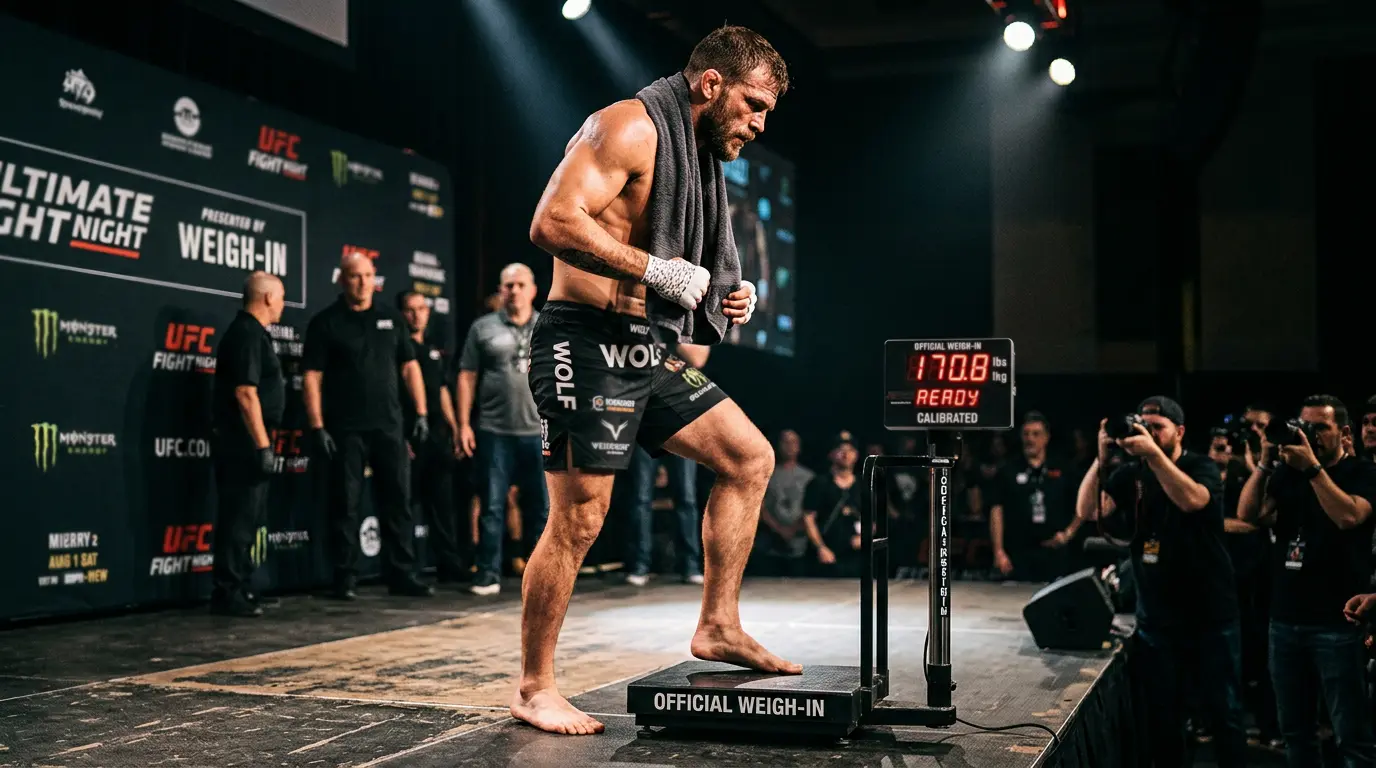
I once watched a fighter step on the scale looking like a ghost — hollow cheeks, sunken eyes, moving like his joints were made of sandpaper. He made weight by half a pound. Twenty-four hours later he took a punch in the first round that would not have troubled him in sparring, and his legs folded. The knockout was blamed on the opponent’s power, but anyone who had seen the weigh-in knew the real story: the weight cut had already done the damage before a single fist was thrown.
Weight cutting is the UFC’s open secret, and for punters who pay attention, it is a reliable source of betting edge. The connection between severe dehydration and fight performance is not speculation — it is physiology. And yet the betting market consistently underprices the impact of a bad cut, treating it as a footnote rather than a fundamental factor.
Biological Impact of UFC Weight Cuts on Fighters
Every UFC fighter competes in a weight class, and most of them walk around significantly heavier than the limit allows. A welterweight fighting at 170 pounds might walk around at 190 or even 200 pounds between fights. In the final week before a bout, they shed that excess through a combination of water restriction, sauna sessions, hot baths, and sometimes diuretics.
The process typically follows a two-phase pattern. During fight camp — the six to eight weeks of preparation — a fighter loses body fat through diet and training. This is the healthy part. In the final five to seven days, they strip water weight through deliberate dehydration. A fighter might lose 15 to 20 pounds of water weight in that final week, with the most extreme cuts dropping 25 pounds or more.
After weighing in, fighters have roughly 24 hours to rehydrate before the fight. They consume large volumes of fluids, electrolytes, and food to recover as much function as possible. The UFC’s partnership with USADA includes some monitoring of rehydration protocols, but the reality is that no amount of rehydration fully reverses the effects of severe dehydration. The body does not simply snap back to baseline.
Some fighters cut better than others. Smaller frames with less muscle mass tend to tolerate cuts more easily, while heavily muscled fighters struggle to shed water without losing function. A fighter’s cutting history matters too — someone who has missed weight previously or been visibly drained at weigh-ins is a higher risk than a fighter who consistently makes weight looking comfortable.
Dehydration, Chin Durability, and Cardio Loss
The medical literature on dehydration and combat sports is sobering. Severe dehydration reduces cerebrospinal fluid — the cushion that protects the brain inside the skull. Less fluid means less protection. Less protection means a punch that would have been absorbed at full hydration becomes a knockout blow. This is not theory; it is documented physiology, and it explains why knockout rates spike in fights where one or both fighters had notoriously bad cuts.
In the heavyweight division, about 50% of bouts end by knockout, but that figure includes fighters who do not cut weight at all. In the middleweight and welterweight divisions, where cuts are more severe, knockout rates sit lower in aggregate but cluster around fighters with histories of difficult weight management. When I cross-reference fighters who have missed weight or looked visibly depleted at weigh-ins with their subsequent knockout loss rates, the correlation is striking.
Cardio is the other casualty. Dehydrated muscle tissue produces lactic acid faster and clears it more slowly. A fighter who threw crisp combinations for five rounds in their previous fight might gas out by round three if the weight cut was particularly harsh. The effect is most visible in the later rounds, which is why I pay special attention to the over on round totals when a fighter with known cardio issues is coming off reports of a rough cut — they may survive the early rounds on adrenaline but fade when the pace demands sustained output.
Put simply, a bad weight cut attacks two things simultaneously: the ability to absorb damage and the ability to sustain effort. Both of those directly influence betting markets — method of victory, round totals, and even the moneyline.
Reading the Weigh-In: Red Flags for Punters
Weigh-ins are public events, streamed live and available on replay within minutes. I watch every official weigh-in for cards I am planning to bet on, and I look for specific signals that a fighter’s cut went badly.
The most obvious red flag is visual. A fighter who looks gaunt, whose skin appears loose on their frame, whose movements are sluggish and deliberate rather than sharp — that fighter has pushed the cut too far. Compare their weigh-in appearance to previous events. If they typically look lean but healthy at 155 and this time they look skeletal, the cut was worse than usual.
Behavioural signals matter too. Fighters who refuse to engage in the traditional face-off, who avoid standing for extended periods, or who sit down immediately after stepping off the scale are conserving energy because they have very little left. Contrast that with a fighter who bounds onto the stage, flexes, and talks to the crowd — they have energy to spare, which means the cut was manageable.
The weigh-in timeline offers another clue. Official UFC weigh-ins have a window, usually starting at 9 AM. Fighters who weigh in early are typically comfortable with their weight. Fighters who wait until the final minutes of the window are often still cutting, squeezing out the last ounces in the back room. Late weigh-ins combined with a drained appearance are the strongest red flag I know.
One caveat: some fighters always look terrible at weigh-ins and always perform well the next day. They have mastered their cut protocol and can rehydrate effectively. The signal is deviation from their own baseline, not comparison to other fighters. A fighter who always looks drawn at 135 is not a concern. A fighter who usually looks fine at 135 but this time looks awful — that is the bet-relevant information.
What Happens When a Fighter Misses Weight
A missed weight is the most extreme outcome of a botched cut, and it creates a peculiar betting situation. The fight typically still goes ahead, but the fighter who missed weight forfeits a percentage of their purse to the opponent. Underdogs win approximately 35% of UFC fights overall, but fighters who miss weight actually win at a slightly higher rate — counterintuitive until you realise that missing weight means they are bigger and stronger on fight night because they stopped cutting early.
When a fighter misses weight, I reassess three things. First, the size advantage: the fighter who missed is effectively competing at a higher weight class, which translates to more power and durability. Second, the opponent’s mental state: accepting a fight against a larger opponent after they have failed to meet the agreed terms can be psychologically demoralising. Third, the financial penalty: while losing part of their purse might affect motivation, fighters who miss weight often perform with a sense of urgency, knowing they need to justify the controversy.
The market’s typical reaction to a missed weight is to shorten the odds on the opponent and lengthen them on the fighter who missed. This reaction often overshoots, creating value on the fighter who missed weight. I am not suggesting you back every weight-misser — the reasons for missing matter. A fighter who missed by half a pound on a tough cut is different from a fighter who came in three pounds over because they did not take the camp seriously. But the blanket market correction toward the opponent frequently goes too far.
For a look at how divisional weight dynamics create broader betting patterns, the weight-class betting trends analysis covers finish rates and round distributions across every UFC division.
Does a fighter who misses weight actually win more often?
Slightly, yes. Fighters who miss weight retain a size and strength advantage on fight night because they stopped their cut early or competed at a higher effective weight. However, the correlation is not strong enough to bet blindly — context matters, including why they missed, by how much, and whether the opponent accepted the fight willingly.
How can I find out if a UFC fighter had a bad weight cut?
Watch the official weigh-in stream and compare the fighter’s appearance to their previous weigh-ins. Look for gaunt features, sluggish movement, and late arrival on the scales. Social media posts from journalists covering fight week often include notes on which fighters looked particularly drained. MMA news sites also report weight-cut complications when fighters or their camps disclose issues.
Published by the ufc Fight Bets team.